
Butler responds to HTA review with rolling guidelines review
By Megan Brodie 1 year ago | In Industry, Politics- 1 year ago
4 September 2025
Federal Health, Disability and Ageing Minister Mark Butler has responded to the Implementation Advisory Group’s (IAG) interim report by promising a “rolling review” of the PBAC guidelines, starting with comparator selection and the discount rate.
More than three years after the HTA Review was scheduled to begin, and at which time the implementation of a ‘world’s best practice’ discount rate was to be implemented, the Government’s first response (after the establishment of the IAG) has been to carve out areas for further review, focusing on the PBAC guidelines.

The immediate actions announced by Minister Butler are:
- Commence consultation on trialling new ways to streamline assessment of medicines;
- Begin a rolling review of the PBAC Guidelines prioritising comparator selection and discount rate as the first areas for review;
- Undertake rapid research into areas of high unmet clinical need and high added therapeutic value, including agreed definitions of these terms;
- Develop a HTA stakeholder engagement framework with a particular focus on improving consumer and patient engagement; and
- Hold twice yearly stakeholder meetings to consider specific issue related to medicines for First Nations people.
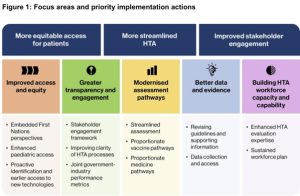
The IAG interim report provides advice on 42 of the 50 HTA Review recommendations grouped under the themes of:
- Improved access and equity;
- Greater transparency and engagement;
- Modernised assessment pathways;
- Better data use and enhanced evidence; and
- HTA workforce capacity and capability
 Updating the PBAC guidelines is a key element of the interim report, which says “it is important that HTA guidelines are updated to reflect evolving best practice, stakeholder expectations and emerging challenges”.
“The HTA Review found that existing guidelines do not give participants enough clarity on the HTA process for presenting, using and assessing emerging evidence, and evidence for emerging technologies,” the IAG states.
“Updates to the PBAC and MSAC guidelines would ensure Australia’s HTA processes remain fit for purpose in a rapidly evolving health landscape. To achieve this, updates should be informed by research and consultation with a wide variety of stakeholders, including Government agencies, clinicians, industry, consumer representatives, and patient groups.
“The IAG notes that a comprehensive review of the PBAC Guidelines is overdue, and that a number of the HTA review recommendations refer to updating the Guidelines. The IAG noted that the review could be commenced prior to the IAG’s final report, focussing on some priority areas including comparator selection and discount rate.”

The PBAC Guidelines are considered the framework within which the committee makes its decisions, arguably reflecting the government’s policy interpretation of the amount of discretion the PBAC has.
For example, Butler intervened to enable the listing of newer oral contraceptives on the PBS as the PBAC guidelines were considered too restrictive to enable the matter to progress – a point of contention for both industry and government.
The last review of the PBAC guidelines was six years ago.
“Rather than doing a single review of the whole guidelines, which would take some considerable time, we’re going to start to pull out bits of the guidelines that we think are particular priorities and review them in a rolling fashion,” Butler said at PharmAus.
“The first two parts of the guidelines that we are prioritising are the aspects that deal with comparative selection and with the discount rate. We will start that work very quickly with an intention to wrap up that review quickly as well.
“We have also accepted the advice of the Group to undertake rapid research in areas of high unmet clinical need and high added therapeutic value. I’ve accepted the advice that we need to do work, even if only to try to reach an agreement around the definitions of those two critical north stars for so much of the work that happens under HTA. We will be starting that process very quickly.”
“For patients, patient advocacy groups and clinicians, it is essential we urgently get on with HTA reform and make the PBS faster, fairer and fit for the future,” Medicines Australia CEO and IAG member Liz de Somer said.
“The actions announced by the Minister today are a start as we progress a reform package for 2026-27 Federal Budget consideration. We look forward to working with the Government on updating the PBAC Guidelines to revise the application of lowest cost comparator.
“We see this as an essential measure, so the Minister doesn’t have to intervene in an ad hoc manner like he did for Australian women to access newer contraceptives.”
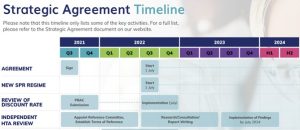
While the ongoing string of reviews to change Australia’s five per cent discount rate that has stretched over four years appears no closer to being changed, MA said it was “pleased the Government will quickly commence trialling new ways to streamline assessment of medicines”.
It also welcomed the “biannual meeting to consider issues related to medicines for First Nations people”.
The IAG expects to complete its initial prioritisation work by October to allow for “further consultation and feedback to be provided by key stakeholders ahead of the IAG providing its final advice in January 2026”.
“There’s a lot more for us to consider as we move forward building an HTA system that is strong and fit for purpose for the future, that meets the interests of industry, which is the key investor in these new therapies, but also meets the interest of Australian patients and consumers as the ultimate beneficiaries of a high functioning PBS,” Butler said.
“I’m committed to looking at that advice as quickly as I’ve tried to look at this latest advice, but I think now is the time get on with it.
“We’ve got five or six pieces of work that we’ve been able to extract from this really important report from the IAG and [IAG Chair] Andrew Wilson’s supplementary advice to that. I look forward to working with you all to make it a reality.”
©MedNews 2025